Saturday, December 15, 2012

Farewell Dinner

With the rotation over, my preceptor brought me to a farewell dinner.  German food and like nearly everything else I've eaten here so far, really tasty:

Pork Knuckle, Pork Schnitzel, Sausages Platter

Napkin Dumplings

Sauerkraut
The napkin dumplings looked interesting but were kind of tasteless.  The meats though were another story.  I think every culture has some version of the method in which the pork knuckle is cooked, but this one was something else.  The knuckle was huge but the skin was still peppery and crunchy and the meat was juicy and tender.  The schnitzel was almost like a thin tonkotsu but the mustards that were paired with the meat really brought out some great umami flavor.  There was so much food we couldn't finish it all!

For the rest of my limited time here, I'm a tourist so the rest of the posts will probably be all sights and food!

Last Day of Rotations

I knew this day would come fast, but I still can't believe I've made it to this point already.  I've lived in Singapore for 5 weeks now and I still feel like there's a lot I haven't seen or eaten.  I started reflecting on the rotation by revisiting the path I walk to the hospital every day and the things I pass by:

My neighborhood, Tiong Bahru
The bridge I walk across the highway to get to the hospital


Hospital Entrance
The hospital is so large it has its own 7-eleven

There's one in every restroom, it is a cancer center after all
First, an update on my MTX toxicity patient.  After 2 weeks, he's finally cleared his MTX and his kidney has returned to normal.  It's been a long ordeal and we're just glad he didn't really catch any nosocomial infections so he can go home now.

Of course since it was my last day, I needed to do a final patient presentation.  This was an interesting patient of mine because she developed Ewing sarcoma which is normally only seen in pediatrics, more often seen in males, and is rarely seen in Asians.  Her prognosis isn't good and she's developed post surgical complications that is delaying her chemotherapy, but since it is my last day I won't know how it turns out.  Learn more here:


I do feel like I accomplished what I wanted to learn on the rotation.  I was able to learn a bit about the healthcare system which was a major academic goal for this block for me.  I learned a lot about supportive care measures for chemotherapy including antiemetics, management of neutropenic fevers, and appropriate antimicrobial prophylaxis for different chemo regimens.  I learned how to manage methotrexate toxicities and calculate its kinetics.  Because the physicians had weekly teaching sessions, I also learned quite a bit about pathophysiology of some cancers.  Conversely I was able to teach physicians about a few things like my presentation on CMV treatments and the pharmacology of some drugs like Januvia and methotrexate.  I was even able to help out with a portion of the write up for my preceptor's phase II study of a specific chemotherapy regimen for B cell lymphomas that will be conducted soon, so I feel like I contributed a good amount.  Essentially, because everyone here follows US guidelines, the practice is not too different but the subtle nuances like how payments work and the different drugs available did present some challenges during the hospital stay and when getting ready to discharge the patient.  Still I enjoyed working here a lot.  It was definitely a worthwhile rotation and something I will remember fondly.

Healthcare System Recap

Since I was in the hospital most of the time, I wasn't really acutely exposed to how the healthcare system manages payments and reimbursements but I was still able to get a working understanding of how the health care system works and it is rather different that in the US.  

The government requires all Singaporean citizens to deduct 20% of their paychecks to go into a medical fund like an HSA.  There are different tiers (Medisave, Medishield) but it boils down to the fact that the patient is responsible for payment of services.  Everything has a fee or cost associated with it so the system creates a disincentive for patients to abuse the system.  When they are in the hospital, one large fee is charged to cover all in house costs.  When the patient is discharged, they must use their Medisave/Medishield to pay for the fees.  With am care, clinic visits have copays but medications are charged by the tablet, both of which also require patients to pay with their Medisave/Medishield funds.  Patients can use the Medisave/Medishield funds of their spouses and children as well if they don't have enough on their own.  Only when all the funds are exhausted will the government step in and government help is very strict and limited.

There's really no way the US government would be able to require everyone to save 20% of their paychecks for medical expenses.  There would probably be mass protests if the idea even came up.  The idea to disincentivize abuse of the healthcare system by making patients responsible for their own costs would definitely help reduce costs but the challenge is finding a way to do it effectively given the limitations of the US system.  Until then, costs will continue to rise with all the unnecessary things that occur in the US healthcare system.

Friday, December 14, 2012

Tourist for a Day, Part 3

I got some time off before my last day of the rotation here so I could do some more sightseeing with my limited time left.  I went to a nicely done man made park called Chinese Garden in the morning that is almost like Golden Gate Park in San Francisco, but with Asian motifs:


Then I went to another hawker centre that I had been wanting to try out on the western side of Singapore.  I think the good cheap food from these hawker centres is what I will miss most when I leave.  This was from a highly recommended BBQ place:

Cha Siu and Suckling Pork RIce
Vegetables are really expensive here for some reason if you eat out so a lot of the time, especially at these hawker centres, you really only get meat with the meal.  The cha siu had a nice soft texture to balance the sweet juices from the BBQ marinade, and the suckling pig had very crispy skin and tender fatty meat.  Total damage: $2.45 USD.  I've said it many times before but there's no way you can get food this good for this cheap back in the states!  

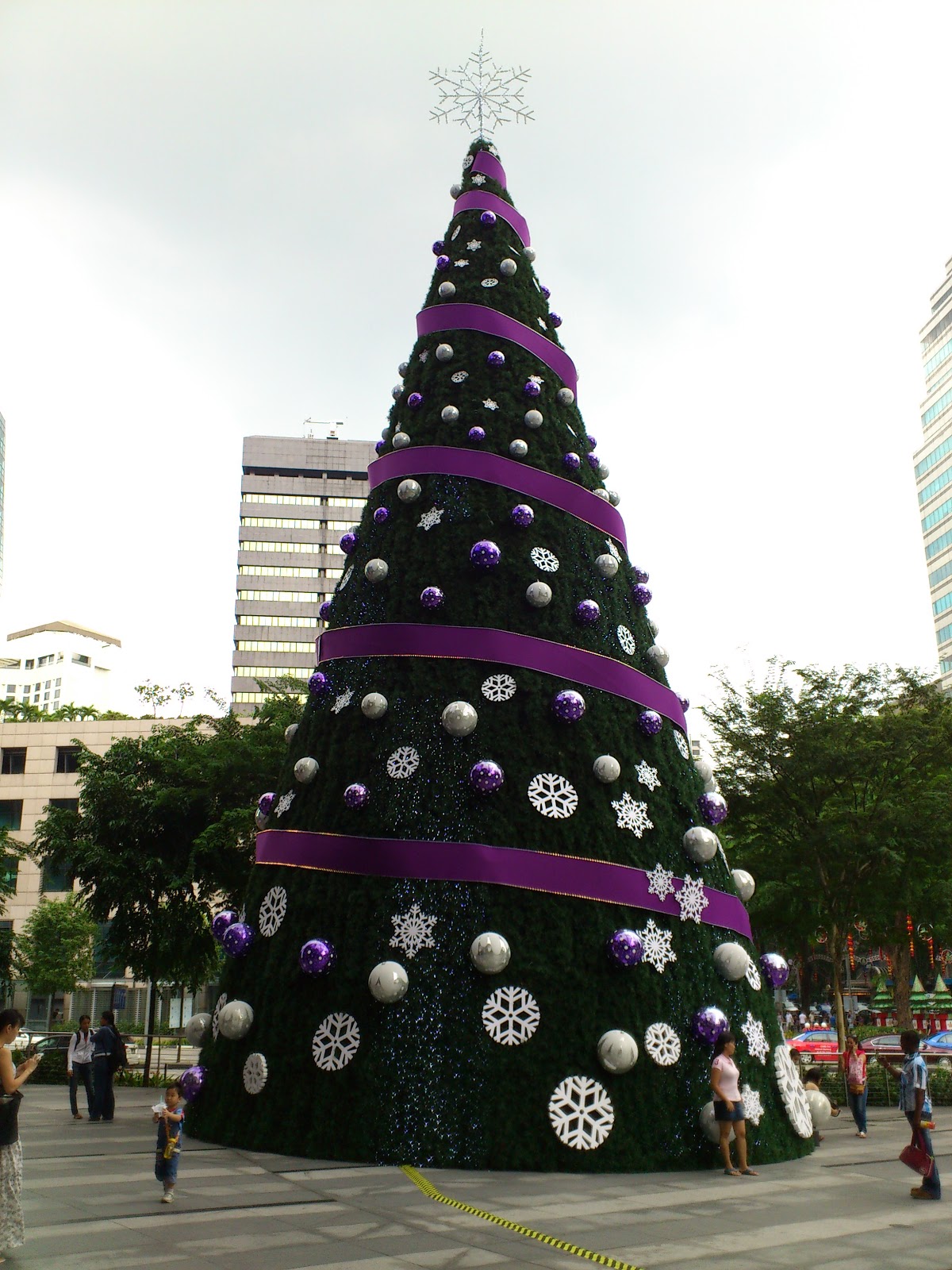
Towards the end of the day I went to the Orchard Road district to buy souvenirs and farewell gifts a little early.  This area is legendary for cramming 22 malls into a 3.5 mile stretch of road!  Pretty relaxing day before my final presentation this week.  Orchard Road is always very busy though and heavily decorated for Christmas:


Random Food Pics 7

A smattering of what I've seen and/or eaten since the last post, all delicious of course!

Chicken Katsu Burger and Hokkaido Potato Wedges


Butaten (Pork Belly) Tempura Soba

Kaya Butter Thick Toast

Laksa

Fish Biryani Platter

Hainanese Pork Chop Curry Rice

Keropok (Indonesian Chips and Salsa)

Beef Rendang and Nasi Kuning (Turmeric Rice)


Akamaru Tamago (Pork Belly and Soft Boiled Egg) Ramen

Mango Pudding

Looks like mortar and pestle but is actually to grind your own sesame sauce!

Mixed Katsu Combo
 

Final Am Care Clinic Visit

Yesterday I was lucky enough to get some time to visit a polyclinic with an am care pharmacist who happens to have graduated from UCSF in 2006.  A polyclinic here is owned by the government and provides heavily subsidized care to the local communities, much like the Healthy SF clinics in San Francisco or Vista Community Health Center in Santa Rosa.  The specific clinic I visited today was a diabetes, hypertension, hyperlipidemia clinic which was a great experience for me since I was able to compare with my internship in the same setting back in the US.

Much like in the hospital, am care here is evidence based with guidelines, probably because the pharmacist who runs the clinic was trained in the US.  She has a total of 6 clinics scattered across the country and after establishing them about 4 years ago, she's now in charge of training new pharmacy grads to work in am care.  At the community level, like in the US, physician pay is less than private practice so a majority of the physicians only do the work here because they really like working with the local, disadvantaged population.  The problem is many of them are part time so they rotate through clinics frequently and patients often see a different physician at each visit.  They get tired of telling the same story of their medical history to each new physician so at some point they just stop being as responsive.  The great thing about the pharmacy clinics here is that the pharmacist becomes a familiar and steady face to the patient because they don't rotate like the physicians.  Many times, as in the states, the patient becomes more comfortable discussing issues with the pharmacist rather than the doctor because of the rapport that has been built up so it is very good to see that pharmacy here also takes a major role in patient care on the teams.

We still follow ADA, JNC7, CHEST, etc here to make clinical decisions but there are some nuances that make things a little more difficult.  Because of the way the health care system is set up here, each visit incurs a copay with the pharmacist.  It's usually very cheap, about $5, so it doesn't deter the patient and it pads pharmacy's budget a little.  The issue is when the patient is prescribed a medication, the cost of the drug is fully the patient's responsibility and it is calculated per tablet.  If the patient needs say 30 mg of atorvastatin, it would save them money if you prescribe 40 mg of atorvastatin instead so that you wouldn't need 2 separate prescriptions of 20 mg and 10 mg which doubles the cost for the patient.  It's actually a pretty good way to make sure that patients don't abuse the system to get extra medications, but it would be impossible to implement in the US.

I think the biggest challenge I saw here was that patients do not perform SMBG for their diabetes.  Like in the states, the device is usually cheap to free but the test strips cost a small fortune.  Because there is no insurance for these low income patients (the government does not pay for the medications unless you fulfill certain very strict requirements), the full cost of the strips falls on the patient.  As a result, patients will usually only SMBG maybe 2-3 times a week if at all and most only get fasting BG readings when they come to the clinic visit.  

Since the patients don't SMBG, the pharmacists here rely much more heavily on the A1c to determine control.  The fasting BG on the day of the clinic just gives a snapshot that may or may not be helpful.  If the A1c is >8.3, the pharmacists know they can be more aggressive in titrating insulin (faster than the normal 2 units we were taught in school).  I've found that patients here really aren't that resistant to starting insulin, unlike in the US.  Part of the reason might be because everything is in an insulin pen.  Lantus solostar actually costs less than the Lantus vial so it saves the patient money and helps improve adherence by making it easier for the patient to use the insulin.  The diabetes cases here are more deceptive for the fact that many of the patients who have DM appear rather thin.  I also see a lot more Januvia here for some reason but I'm not sure why.  Overall, a worthwhile visit to the primary care clinic here to see am care practice in another country and note the subtle differences.

Thursday, December 13, 2012

Mini Projects

In my last week here I've been helping my preceptor out a lot as they gear up for a Phase II trial involving adding high dose methotrexate to the standard R-CHOP protocol for various lymphomas to test its effectiveness.  I've been looking into the pharmacology of the drugs to summarize into the trial protocol and helping to edit the actual protocol monitoring sheet so it's pretty interesting stuff.  At the same time, my preceptor requested that I look more into the classifications of lymphomas and summarize them for my own knowledge so here it is: